

How to Say "ISO a Photographer" - but Better

Photographers know this phrasing well, we see it in Facebook groups, neighborhood apps, community boards, basically anywhere people gather online to ask for recommendations:
"Hey! Looking for a photographer for maybe thirty minutes. We just want a few quick photos. Nothing crazy, shouldn't cost an arm and a leg. Any recommendations?"
If you're not in the industry, that sounds completely reasonable, truthfully. You know roughly how long you think you want someone around, you don't need a "massive production," and you have a general sense that you don't want to overpay, which is just smart consumer thinking. The problem isn't the intent, it's that this kind of framing leads to a frustrating experience for everyone involved. The client doesn't get what they hoped for, the photographer can't deliver their best work, and the whole thing ends with someone feeling shortchanged.
So instead of just throwing my name into the comments, I'd rather do something more useful and explain how a client can set a photography project up for success from the very first message.
Start With the "Why," Not the "How Long"
The most common instinct when reaching out to a photographer is to lead with logistics (how much time you think you need, how many photos you're imagining, roughly what you think it should cost). Those things all matter eventually, but they're the wrong place to start, because once you tell me why you need photos, the rest of the conversation tends to sort itself out naturally.
What are these photos for? A business website, a product launch, a personal milestone, social media content, a family keepsake? The answer to that question tells an experienced photographer almost everything they need to know, from style and tone all the way down to deliverables and timeline. "I need headshots for my new consulting website and LinkedIn profile" is something we can immediately work with. It tells us the use case, the likely feel, the number of looks worth planning for, and from there we can have a real conversation about time and cost that actually means something. "A few quick photos" doesn't give us much to go on, so when we start asking follow-up questions, that's not us being difficult, we're trying to make sure you end up with something worth having.
Understand What You're Actually Buying
Here's something that genuinely surprises most people the first time they hear it: the photos you receive are not the photos we take. To deliver a set of images you love, say, ten or fifteen strong, polished shots, a photographer might shoot two or three hundred frames, accounting for motion, expression, and unpredictable moments. After the shoot, we're going through every one of those frames to find the keepers, then moving into editing: color, exposure, retouching, making sure the final set feels consistent and intentional, so by the time your images are delivered, what looked like a thirty-minute shoot has quietly turned into a half-day commitment or more.
That's just what doing the work properly looks like. When you realize you're paying for years of skill, thousands of dollars in gear and software, insurance, and the trained eye that knows exactly when to press the shutter and when to wait one more second, the pricing stops feeling arbitrary and starts making a whole lot of sense.
A Quick Note on "Arm and a Leg" — and What It Signals
Since we're being honest about assumptions, this one's worth a moment. For insurance and legal valuation purposes, the combined loss of one arm and one leg carries a benchmark value of roughly $350,000 (I google'd it!) that's the number courts and insurers actually work from. So when you say something "shouldn't cost an arm and a leg," you're technically setting a ceiling of $350,000, which is genuinely appreciated.
Here's something harder to hear, but worth knowing: when a creative professional reads "shouldn't cost an arm and a leg," what we feel, whether you intend it or not, is something closer to I don't especially value creative work. I need to get this done, get it over with, and spend as little time and money as possible. That may be the furthest thing from your actual intention, but that's the translation happening on the other end of the screen.
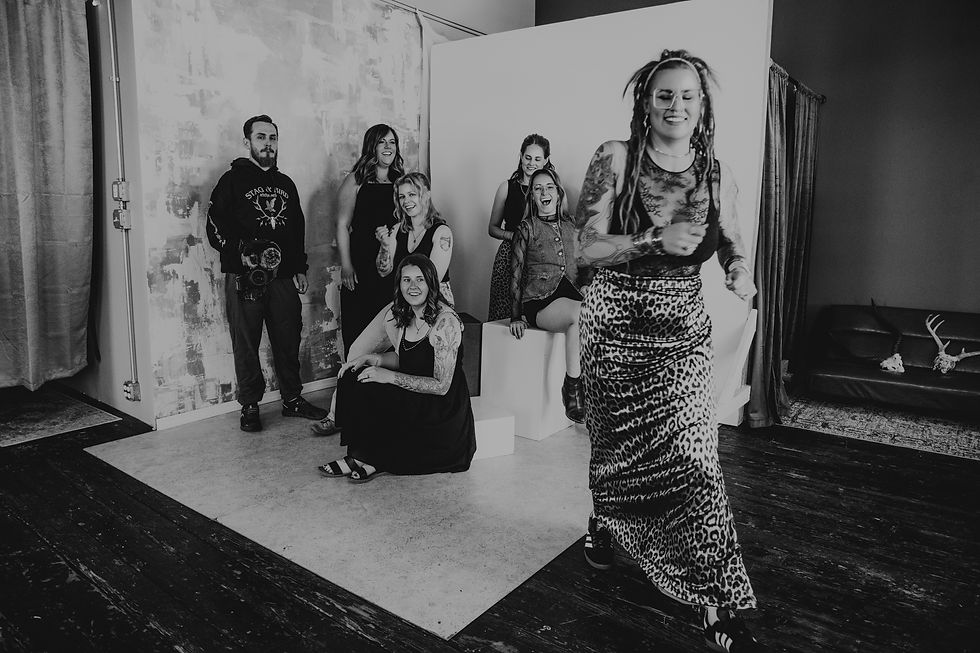
For a lot of photographers and creative companies (Stag & Bird Curated Photo Experiences included) that framing is a signal that we're probably not the right fit for each other, and that's perfectly fine. Not every photographer is right for every client, and not every client is looking for the kind of experience we build our work around. But if you are looking for something at a higher level... a real creative partnership, thoughtful execution, images you'll still love in ten years... the single easiest thing you can do is skip the hyperbole and just give an actual dollar budget.
Seriously, that one change fixes so many problems. It keeps you from spending time falling in love with a photographer whose work is exactly what you want, only to find out later that the investment is outside what you had in mind. It lets the photographer tell you honestly what's possible, suggest the right package, or point you somewhere better suited to your needs. Everyone walks away with their time intact and a clearer path forward. Your time (and mine) isn't wasted.
How to Get the Best Experience — and the Best Photos
Lead with your goal rather than your timeline, and let the photographer help you figure out the rest from there. Share your budget early. This is the single thing that makes the biggest difference. Photographers work at every price point, and a good one will tell you honestly what's achievable within your number or point you toward someone who's a better fit. When you get a quote, ask what's included: editing, delivery time, the number of final images, usage rights. Understanding what you're actually getting makes the whole process feel less like a negotiation and more like a collaboration.
When your photographer suggests a different location or a slightly different approach than what you had in mind, hear them out: they're not padding the bill, they're trying to get you something you'll be proud of for a long time.
The Bottom Line
Great creative photography doesn't have to be a mystery, or feel like a gamble. Lead with your purpose, be open about your budget, treat it like a partnership rather than a transaction, and you'll be amazed at what becomes possible. The photographer you hire will bring their best to the work, because they'll know exactly what success looks like for you, and that's the kind of project everyone wants to be part of!



Comments